
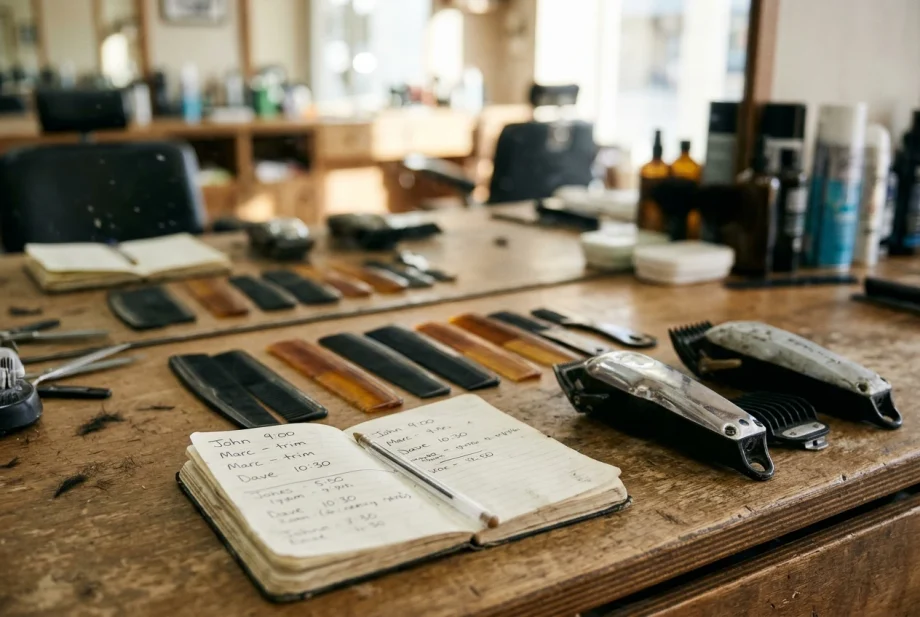
A good haircut gets a customer into your chair once. Whether they come back depends on everything around the cut: how you greeted them, whether you remembered them, and how easy you made the next appointment. This article covers how to retain customers for a successful career, in the order a new barber can put it to work.
It is written for barber school students and new graduates who are starting or already working in their first shop. A haircutter fills a chair. A professional builds a clientele, a list of people who ask for you by name. Each section below is one habit that builds that list.
Stay busy
I think many customers read a full chair as proof that other people trust the barber, so an empty chair works against you, especially in your first months when you have few regulars.
You cannot control how many people walk in. You can control what you do between clients. Standing at your station scrolling a phone tells the shop you are waiting for work to be handed to you. Using the time tells them you are ready for it.
- Keep the shop clean. Sweep up out front so the entrance is welcoming to all entering the shop. Keep the windows sparkling without being asked. Keep the bathroom a top priority. A clean restroom says a lot about your hospitality
- Reset your station. Wipe the counter, oil your clippers, sort your guards, and wash your combs.
- Watch the senior barbers. Choose one skill a day, such as how they handle a cowlick, and watch it closely.
- Sweep and restock without being asked. The shop remembers who does useful work when walk-ins arrive.
- Introduce yourself as the new barber. Get to know everyone by name and offer pleasant conversation. Offer beverages to those in reception and your busy barbers who may need to hydrate while working a busy schedule.
- Take all walk ins. Ask how the rotation works first, and never take a walk-in out of turn.
Every walk-in is a possible regular, so cut each one as if you expect to see them again.
Welcome everyone with a smile
The first ten seconds set the tone for the appointment. Stand up when the customer comes in, look at them, smile, and say hello. Offer a firm handshake. Guide them to a chair that’s ready to receive them. Give the same welcome to everyone. Even those getting serviced by a teammate. Make everyone feel welcome and feel good for coming to patronize the shop. The teenager getting a first fade, the older man who has worn the same cut for decades, and the customer who looks rushed all get the same energy. You cannot tell which one will send three friends your way, so do not try to guess.
A smile also settles your own nerves. Customers notice when a new barber is tense, and a tense chair makes people hesitate to book again. I think customers forgive a slow cut more readily than a cold greeting. People will forget how you made them look but they will never forget how you made them feel.
Stay late, come early
Arrive no later than fifteen minutes before you are due. The earlier the better Use that time to clean the shop, check your clippers, get hot towels ready, shine those mirrors & windows, lay out your tools, and read the day’s bookings. A customer who walks in at opening should find you ready.
Staying late matters for the last customer of the day. Do not look at the clock during their cut. A hurried last cut is easy to spot, and that customer will remember it. Finish carefully, they will appreciate it. Clean your station fully so tomorrow you’re ready to go.
Senior barbers notice who arrives first and leaves last. In a healthy shop environment they will later pass overflow clients to a new barber they can trust.
Learn everyone’s name
A customer who hears their own name feels recognized, you just made it personal and a recognized customer has a reason to choose you over any barber with an open chair. Learn the names of customers, the front desk, and the other barbers. Making connections with people is how you grow. 80 percent of retention is building trust.
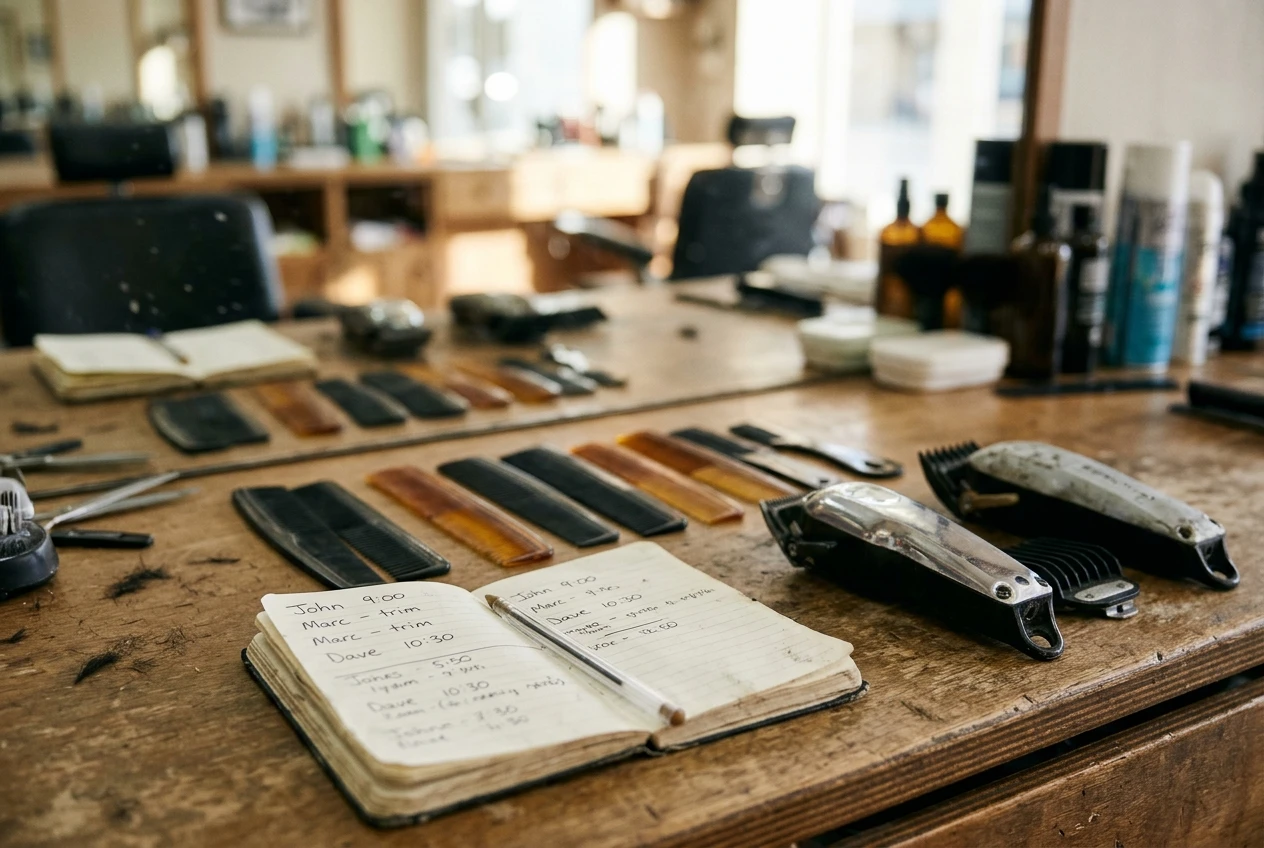
Here is a method that works for most people:
- Repeat the name when you hear it: “Good to meet you, Marcus.” “Hey Marcus are you into sports?”
- Use it at least twice during the visit, once in the consultation and once at checkout. If you need more help to remember it use their name throughout the whole service.
- Write it down right after the cut, with what they asked for.
- Read your notes before their next appointment.
Record the guard numbers, how they like the neckline, any product you used, and anything they mentioned, like a new job or a trip. Next time you can say, “Last time we took the sides to a number two. Same again?” That one sentence shows a customer you were paying attention, which is what most people want from a barber they plan to keep.
Communicate effectively
Most lost customers come from a cut that did not match what the customer pictured. Prevent that with a short consultation every time.
- Ask what they want, then ask a follow-up: how short on the sides, where the part sits, what they disliked last time.
- Repeat the plan back before you pick up a tool. “A number three on the sides, blended up, about two inches on top. Right?”
- Ask whether they want to talk or relax. Some customers want conversation and some want quiet, and a barber who reads that correctly is easy to return to.
- Say what you are about to do before you do something unexpected, such as a straight razor on the neckline.
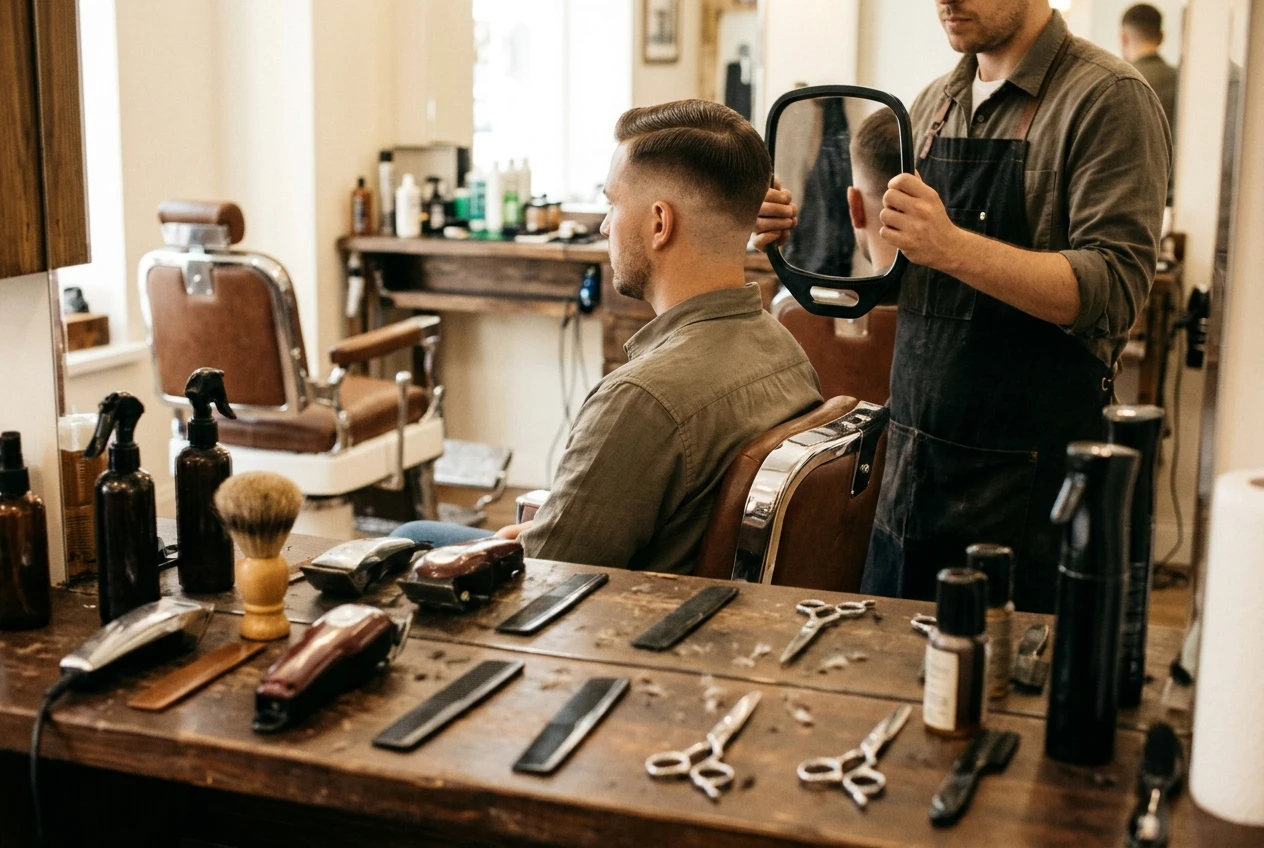
At the end, show the back with a hand mirror and ask if they want anything adjusted. If you make a mistake mid-cut, say so calmly and fix it. Clients forgive an honest correction far more easily than a hidden one. Knowing when not to talk is just as affective as holding conversation. Some people will want silence so they can just relax to the vibrations of the clipper running over their head. Listening is just as important in communication as talking. Short answers to questions usually means they aren’t into conversation today. And that’s ok! When they give long answers and asking you questions for engagement then happily oblige.
Offer incentives
Ask the shop owner what is allowed before you promise anything. Some shops set prices and discounts, and offering an unapproved deal creates trouble for you and the barbers around you.
Where incentives are allowed, small and consistent works better than large and occasional. Some ideas:
- A punch card that earns a free add-on service, such as a beard trim, after a set number of visits.
- A thank-you for any customer who refers a friend, applied once the friend has sat in your chair.
- A small gift for a first visit from someone a regular brought in.
Rebook
Rebooking is the habit that turns a good first visit into a clientele. Book them before the customer leaves, because that is when they are most pleased with the cut.
When you hold up the mirror, say something like, “This will look sharpest in about three weeks. I’m going to put you in 3 weeks from today and if you need to change it just call and let me know” This locks them in but gives them leeway to change if they have to. Offer a specific day and time rather than “Let me know when.” A vague invitation gets a vague answer, and a booked slot gets a customer.
- Enter the appointment in the shop’s system or your own book while they are still at the front desk.
- Tell them how long their style stays clean so they understand why the date makes sense.
- If the shop allows reminder messages, send one the day before.
Your notebook from the name section does double duty here. It tells you who is due back and who has gone quiet.
Remain professional
Professionalism is what makes customers describe you as their barber and not just a barber. Be on time, dress to the shop’s standard, and keep your station clean enough that a customer notices.
Do not gossip about other clients or about other barbers. People tell their barber private things, and they stop doing it when they suspect it will be repeated. Be honest about your skill level too. If a customer asks for something you have not done before, say so and ask a senior barber to guide you rather than guessing in front of them. The core skills a new barber needs prior to charging a fee lists what to have solid before you take paying clients.
Take correction well, because senior barbers are checking the shop’s quality, and your response shows whether you are worth investing in. My post on tips for becoming more coachable goes into how. Your habits also separate you from other new barbers, and how are you setting yourself apart is a good prompt for deciding what yours will be. If you want to know what trips up new barbers most often, what are common mistakes new barbers make covers it.
What keeps your customers coming back?
Which of these habits is hardest for you right now, or which one has made the biggest difference in your chair? Leave a comment below. Other readers can share what has worked for them, and we can build a useful list together.